Farm Fresh Rhode Island
Farm Fresh Rhode Island is growing a local food system that values the
environment, health and quality of life of Rhode Island farmers and eaters.

Growing awareness of local foods

Local Food Guide to RI

Growing access to fresh foods

Farmers' Markets

Growing partnerships for good food

Joint Initiatives

Fresh for All: Eating fresh on a budget

ChardWith the economy so sour, many families are looking for ways to stretch their food dollars. That doesn’t have to mean turning to fast food, as a new TV ad campaign tries to imply.  Or that families must switch to the overprocessed products that pass for food and dominate many grocery stores.

Providing your family with good, healthful foods is not something that has to wind up on the chopping block. In addition to gardening and cooking more, it makes sense to shop for food that’s in season — it’s more flavorful, has more nutrients intact, and is more affordable when it’s in season and therefore in abundance.

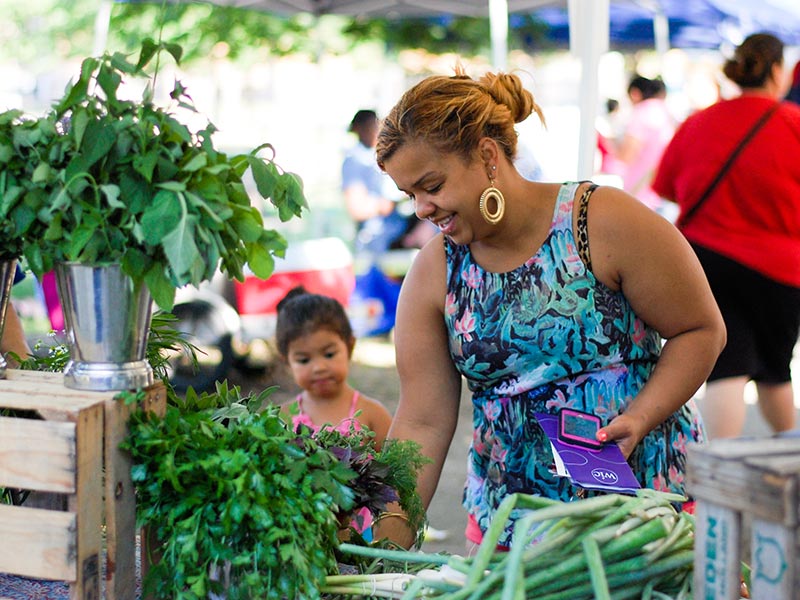
This summer, Farm Fresh is launching two programs to help families on a tight budget access the fresh foods at our farmers’ markets.

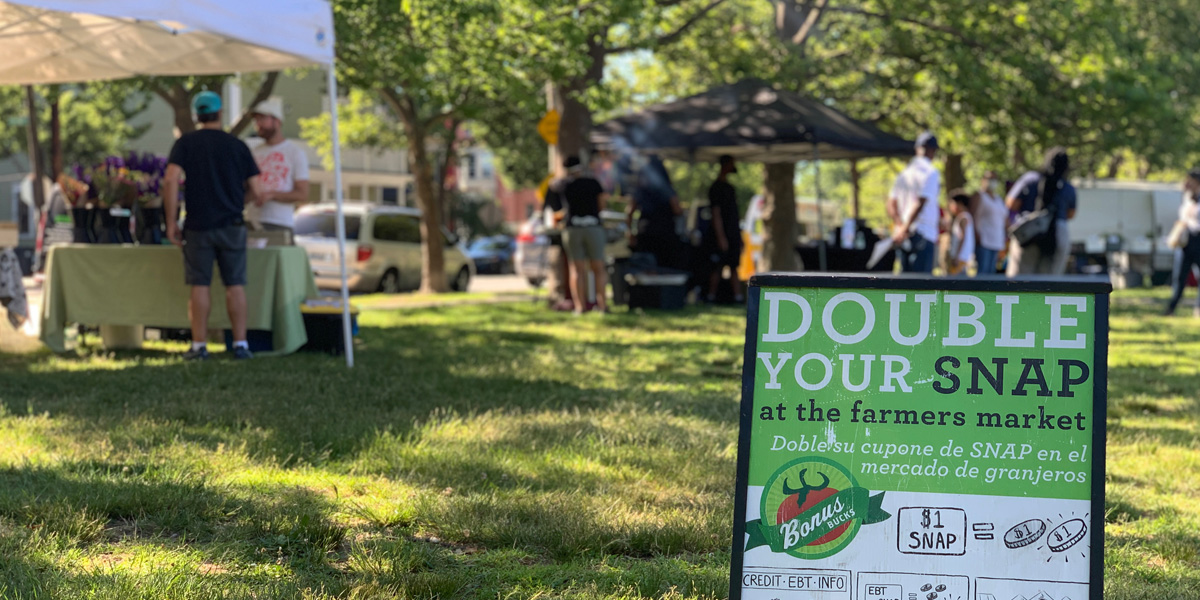
Double Value Program for SNAP Participants
When: June - October
Where: 7 farmers’ markets in Providence, Pawtucket, and Woonsocket
Who: Farm Fresh RI with funding from Wholesome Wave

The Double Value Program is simple: a SNAP (Supplemental Nutrition Assistance Program) participant brings their EBT (Electronic Benefits Transfer) card to the farmers market and finds the Farm Fresh info booth. A staff person will swipe their card for the dollar amount they’d like to spend, and then match that amount up to ten dollars. For example, spend $16 of SNAP benefits at the market and receive $26 in Fresh Bucks, tokens for use at the market. Farm Fresh RI will pilot the Double Value Program for SNAP participants at seven farmers markets this season.

Healthy Foods, Healthy Families
When: July - September
Where: 4 farmers markets in Providence, Pawtucket, and Woonsocket, see below
Who: Farm Fresh RI, URI SNAP-Ed with funding from Blue Cross Blue Shield of RI

Healthy Foods, Healthy Families program that helps families learn how to turn fresh, seasonal foods into delicious, affordable meals. The program will run at Armory Park and Broad St. Farmers Markets in Providence, and the Pawtucket and Woonsocket Farmers Markets. Low-income families that participate in WIC or SNAP can sign up at one of these markets or by emailing Christie.

The Healthy Foods, Healthy Families program includes recipes, shopping tips, children’s activities, surveys, and cooking demonstrations. All materials and lessons will be in English and Spanish. In order to encourage families to attend several weeks in a row, individuals will receive gifts for participating: a cookbook, a reusable shopping bag, and after completing three weeks, $25 in Fresh Bucks.

We hope that the Double Value program and Healthy Foods, Healthy Families give Rhode Islanders some help with their grocery bill and allow them to continue to make the most of the delicious, nutritious food grown in Rhode Island.

Tomatoes and cucumbers in June?

Cherry tomatoesTravel to Quebec in late May and you may be surprised by the abundance of local tomatoes, cucumbers, zucchini, apples and potatoes. All of them are crops you’d expect to see first start coming into season in the middle of the summer. But in May and June?

Actually it’s not just Quebec that has seemingly fast-forwarded the season. More and more Rhode Island farmers have early tomatoes and cucumbers available this year. As the market for local foods matures in RI, so too is our local food systems’ production capacity. RI eaters are hungry for local tomatoes when farmers’ markets and farmstands open in May and June. So RI farmers are figuring out how to grow ‘em earlier and earlier. But how do they do it?

  • Tomatoes. These tomatoes are started in hot houses to be ready for late spring. The cherry tomatoes are particularly delicious. The slicing tomatoes, which are mostly beefsteaks, are missing a bit of flavor but they’re still tastier than any mealy tomato that comes off the truck from California. These early season tomatoes do require some extra technique and greenhouses, and so there’s usually a price premium to cover the farmers’ costs. Right now, we’ve seen tomatoes from Moosup, Schartner and Wishing Stone farms.
  • Cucumbers and zucchini. Certain varieties, like English cucumbers, are happy to start early in a greenhouse. Their texture and flavor are wonderful, just like the summer, but as in tomatoes they require more effort to get going so early than the field cucumbers that come in July and so cost a bit more. Schartner and Wishing Stone are growing early cukes, but we haven’t seen any early zucchini in RI.
  • Apples. Since the apple harvest is until the fall, those in the markets right now have been resting in controlled-atmosphere storage since last season’s harvest. The CA storage maintains a consistent level of oxygen, carbon dioxide and cool temperature so that the apples stay crisp. Some varieties are better at storing than others, and growers optimally stagger when they take the varieties out of storage. In addition, the earlier an apple is harvested and put in CA, the crisper it will be when it’s taken out. So some apples are picked for CA before they are fully ripe, especially if they are intended for this final stretch before the new harvest. The trade-off for these apples is that the flavor and sugars never had the chance to fully develop. So while they are crisp, they’re less interesting to taste. And vice versa, flavorful apples this time of year often lack the crispness of a new apple. The only local apples we’ve seen are Ida Reds from Hill Orchards, which had unexpected crispness, given how fully flavored they are.
  • Potatoes. Though a classic storage crop, there is still no comparison to a fresh dug potato. The RI Royal potato growers sold out in December and most of their potatoes were enjoyed while they still possessed the wonderful youthful flavors. From December and January on the starches begin to break down. These potatoes are good but do taste and cook differently. Come spring, seed potatoes can be exposed to light early in the season and they’ll sprout and produce new potatoes earlier in the season and provide greater yields. It’s impractical to start hundreds of acres of potatoes this way, but it is practical enough to provide delicious potatoes in early June. Moosup and Schartner have new potatoes.

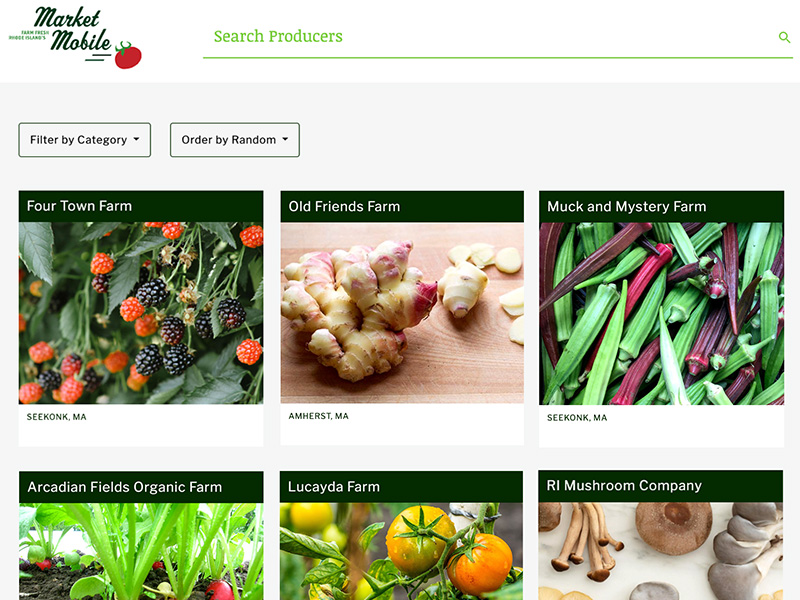
You’ll find these early season crops at these growers’ markets and farmstands, and chefs can buy them on Market Mobile.

2009 Farmers’ Markets are here!

Bike to the marketGet ready for June…

  • Spring spinach, garlic scape and Salty Sea feta omelets
  • Salads of crisp lettuce, spicy arugula, sliced radishes and turnips, chives, and Ida Red storage apples
  • Strawberry rhubarb pies
  • Mint iced tea

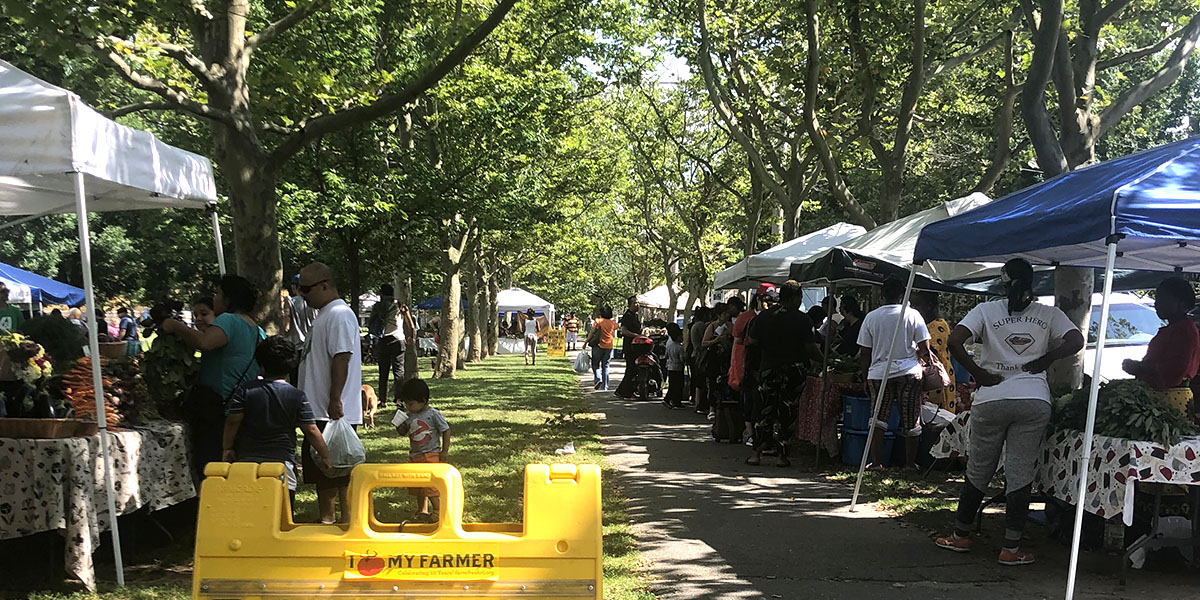
Hurrah! This is what June tastes like at a farmers’ markets near you. With each passing day there is something new ripening and a new farmers’ market opening up for the season. Three of our markets open this week, and the two weekend markets are moving to more spacious, tree-covered spots to accomodate new vendors:

A bit of RI farmers’ market trivia:

  • 40 summer farmers’ markets in 2009 vs. 34 last year
  • 19 in Providence County, 13 in South County, 8 in Eastern RI
  • 1 farmers’ market for every 26,000 Rhode Islanders
  • New markets this year in Harmony, Johnston, Middletown, Portsmouth, South Kingstown, Weekapaug
  • 19 farmers’ markets are already open this first week of June, at least one every day of the week. Bon appetit and cheers to a new season!
  • Zip code with the most farmers’ market (4): 02906 Providence
  • Zip code with the most farmers’ market per person (1 per 4,300 people): 02857 Scituate
  • Towns with farmers’ markets and farmstands (19): Barrington, Block Island, Burrillville, Charlestown, Cranston, East Greenwich, East Providence, Johnston, Lincoln, Middletown, North Kingstown, Portsmouth, Richmond, Scituate, South Kingstown, Tiverton, Warwick, Westerly
  • Towns with farmers’ markets but no farmstands (5): Bristol, Newport, Pawtucket, Providence, Woonsocket
  • Towns with no farmers’ markets but with farmstands (12): Coventry, Cumberland, Exeter, Foster, Glocester, Hopkinton, Jamestown, Little Compton, North Smithfield, Smithfield, Warren, West Greenwich
  • Towns with no farmers’ markets or farmstands (3): Central Falls, North Providence, West Warwick

A weekly box of local fruits and veggies? How sweet (and savory) a 2009 CSA is!

CSA pickupEach week during the summer months, farmers across Rhode Island put together a selection of whatever is at peak harvest. Hundreds of local families stop by the farms or designated pickup spots for that week’s slice of heaven, with flavors that are seasonally spontaneous and guaranteed to be delicious. The farmers benefit too. Normally, farmers must invest in seeds, equipment and months of labor before receiving even a penny for their harvest. But in Community Supported Agriculture (CSA) arrangements, customers pre-pay for the weekly pickups and that helps tremendously.

We surveyed CSA farms to find out which still had spaces available for 2009. We’ll continue to update this list until most CSAs begin (mid-June). Latest update Friday 6/19.

There are many CSA variations, some with work days on the farm, some that offer cheese, and seafood and still others that let customers choose from a market-style selection of produce.

More demand, more ways for low-income RIers to shop for fresh, local foods

Fresh veggiesThe Wintertime/Springtime Farmers’ Market – open May 23 and 30 before transitioning to outdoor summer markets – was the largest number of vendors of any RI market and a record turnout of customers, despite the thick economic gloom. Feeding your family well can be a challenge for those struggling under this economy, but a desire to provide fresh, healthy food for your family knows no boundaries. This year’s Wintertime Farmers’ Market set a Farm Fresh RI record for participation by SNAP (previously Food Stamps) customers: over $4,500 from December 2008 to May 2009. People clearly continue to make good food for their families a priority.

And good food should be accessible to every Rhode Island family. For summer 2009, we are working with our partners to reduce healthy food access barriers:

  • Healthy Foods, Healthy Families nutrition education programs will run weekly from July to September at 4 markets in Providence, Pawtucket and Woonsocket. Activities for parents and kids will offer a window into creating affordable, nutritious family meals from the farmers’ market, with support from Blue Cross Blue Shield. This is in addition to “Veggin’ Out” cooking demos we coordinate with Johnson & Wales and “SNAP Ed” cooking demos from the URI Cooperative Extension.
  • Fresh Bucks, our program to accept SNAP at farmers’ markets, is being used as a model in conjuction with RI DEM, the RI Foundation, and farmers’ markets across RI. There will be 13 markets where low-income families can shop for fresh food this 2009 season and more are planned for 2010. Customers can also pay for CSAs with SNAP through our Fresh Bucks program.
  • Double Value Coupons for SNAP customers. We are working with the Wholesome Wave Foundation to provide more value and greater quantities of nutritious foods, right from the farmers’ markets to those with the greatest need. We are looking to start this program in 2009 or 2010.
  • SNAP Outreach at the Markets: Each week, thousands of people come to our various neighborhood markets. We partnered with the URI Feinstein Center for a Hunger Free America to offer food stamp applications and information at our markets. Many people don’t realize that they qualify for SNAP or perceive a stigma attached to SNAP, even though it would help them put food on the table during a time of need. These new outreach efforts helped contribute to a 40% rise in SNAP usage since 2006.
  • WIC Cash Value Vouchers. These new vouchers will open up more of the federal WIC nutrition program dollars to RI farmers’ markets as a means to increase fresh fruit and vegetable consumption by mothers and infants. Developed in conjunction with the RI Dept of Health and DEM, the vouchers are set for a rollout in October 2009.

Building on years of success with WIC at the farmers’ markets, we began to accept Food Stamps at our markets in 2007. Between summer 2007 and summer 2008, our Food Stamps sales tripled, with over $2,000 in Food Stamps sales at the June to October 2008 outdoor farmers’ markets. (It’s very interesting to see farmers’ market SNAP programs evolve concurrently in other states too.) With more Rhode Islanders aware that you can use Food Stamps at the market and a growing number of RI markets, we hope to again double or triple the amount of fresh foods we make accessible to low-income Rhode Islanders again in summer 2009!

Help us make fresh foods accessible to more Rhode Islanders this summer and for years to come!

Mother’s Day and the rebirth of a new season at the Springtime Farmers’ Market

RhubarbEven though the weather can’t decide between spring and summer, it’s decidedly asparagus, scallions and rhubarb season! Fresh herbs like thyme and cilantro are making a reappearance at the Springtime Farmers’ Market and if we’re lucky the juice of Rhode Island strawberries will be dripping down the sides of our mouths by Memorial Day.

With the rebirth of a new season, it’s a perfect weekend to honor the mom in our lives. If you’re cooking up a brunch menu for your Mother, treat her tastebuds to the fresh flavors at the Springtime Farmers’ Market. This Saturday also features a live cooking demo and sampling by Chef Matt from Chez Pascal.

  • Pâte à Choux tarts with Onion & Fennel
  • Bacon-wrapped Pork meatballs topped with a grating of Divine Providence cheese

Bring Mom along! Also, Little City Growers and Wishing Stone Farm are back at the market this week as their spring harvest gets underway.

Many people are asking what the summer market schedule looks like as we transition to outdoor markets. Take note, Farm Fresh’s two nearby weekend markets have found greener locations for 2009:

  • May
    • Springtime Farmers’ Market
      Saturdays from 10am to 1pm at Hope Artiste Village
      indoor + outdoors depending on the spring rain
      the market will start up again in November
  • June to October

Spring tours for chefs and wholesale buyers

Farm toursSpring is here! With storage veggies on their way out and new growth just sprouting, now is actually the low point for the availability of local produce. But it only gets better, with asparagus and cilantro just around the corner. It’s the perfect time for a trip to the farm.

Farm Fresh RI is sponsoring a different tour every week this spring for chefs, schools, grocers and other wholesale buyers. Meet local producers who will be selling on Market Mobile or directly to your business this summer.

Sign up for a tour. Tours are free but space may be limited. RSVP to Jen for you and your staff at least five days prior.

  • April 20: New Harvest Coffee Roasters - Pawtucket
    While the fair-trade organic beans are roasting away, Rik, Gerra and the crew at New Harvest will take us through a French Press Tasting and explain: it’s about the coffee, how it’s grown, roasted and brewed.
  • April 27: Allen Farms - Westport
    Don’t have a green thumb? Debbie Allen will show us around her organic farm while giving us some insight into growing the perfect greens and herbs.
  • May 4: Aquidneck Farms - Portsmouth
    While the pasture-raised cows are grazing in the fields, Mike Victor and Jim Booth will give us a tour of their farm and show us why Aquidneck Farms is a model for protecting working agricultural land through sustainable agriculture and land conservation.
  • May 11: Matunuck Oyster Farm - Matunuck
    Perry will guide us through Potter’s Pond and we’ll explore and discover why Matunuck Oysters have such a wonderful crispy, briny flavor with a slightly sweet finish. We will even get to shuck and eat some fabulous clams and oysters.
  • June 1: Narragansett Creamery - Providence
    Our trip to Stoney Hill Cattle Farm has been rescheduled to the fall. Instead, we will venture to Providence where we will experience first-hand how Louella Hill and the folks at Narragansett Creamery create their award winning Ricotta, Mozzarella and  the other terrific cheeses you have been enjoying this year!
  • June 8: Four Town Farm - Seekonk
    Founded in 1920, Four Town Farm is a 175 acre family owned fruit and vegetable farm located at the points where Seekonk, Swansea, Barrington and East Providence all come together. Chris Clegg represents the fifth generation to run the land.
  • June 14: Blackbird Farm - Smithfield
    Come see Ann Marie and Kevin’s passion for cattlte. They’ll demonstrate breeding and feeding for natural marbled angus beef, plus sample various cuts of beef with wine provided. 1-4pm.
  • June 22: Ledge Ends Produce - East Greenwich
    Founded in 2004, Ledge Ends Produce is a 12 acre farm run by Erik Eacker and Trish Garland located at the historic Briggs Boesch Farm. Ledge Ends grows certified organic vegetables and small fruit.
  • June 29: Hill Farm - Foster
    Farmer Louis Vinagro, a member of the RI Raised Livestock Association, will introduce us to his 14 acre farm located in Foster, founded in 2003. Louis and his wife Maria raise pure bred Devon cattle and pure bred Berkshire hogs. We will end our tour with a good old-fashioned, pig roast.

All tours begin at 10:30am unless otherwise noted and are FREE for chefs and other wholesale buyers. Bring your staff to see and taste why local food is so important for the environment and economy of Rhode Island. Please e-mail Jen to RSVP or to carpool.

Video: Stroll the Providence Wintertime Farmers’ Market

A quick note about Wintertime Farmers’ Market hours:

  • April: Saturdays, 10 to 2pm
  • May: Saturdays, 10 to 1pm

Jen, our Buy Local RI coordinator and market manager, took a stroll through the market with her video camera one recent Saturday. Take a look:

Greens are back in time for St. Patty’s Day

Pea greensAs the days grow longer and the temperatures grow warmer, so much faster grow the salad greens, cooking greens, radishes, cilantro and dill, too. It means there are a bounty of greens ready for a very green holiday in March. (The greens to the right are Allen Farms’ juicy pea greens, not clover, though they are the same plant family!) Irish or not, St Patrick’s Day traditions involve good food and drink, so plan to celebrate!

The food traditions of St. Patty’s Day feature veggies that are in season and cuts of meat that are affordable and full of flavor.  All you need (except the beer) for your traditional-or-not meal can be found at the Wintertime Farmers’ Market this Saturday from 11-2pm in Pawtucket:

  • Corned beef and cabbage: Cabbage has long been a popular Irish food but corned beef is a more recent addition to the diet. Irish immigrants living in New York City started to substitute corned beef for the traditional dish of Irish bacon to save money. Corned beef is made with brisket and gets it name from the English term corn, meaning a small particle, such as the coarse-grained salt which is used to cure the beef.
  • Potatoes, onions, carrots and turnips: these hearty veggies get cooked along with the corned beef for a traditional “boiled dinner.”
  • Brisket: if you’re not into the salty strong flavor of corned beef, try brisket slow-cooked for a tender main dish
  • Greens: make your meal festive with a garnish of something green! Pea greens, salad greens, spinach, and micro greens are available from Allen Farms, Baby Greens, Ledge Ends Produce, and Simmons Farm.
  • Irish Soda Bread: for sale by Seven Stars Bakery. Or make your own.
  • Irish Coffee: Pick up a pound of New Harvest Coffee for a tasty drink to keep you cheery all St. Patty’s Day.

Chef Branden Lewis and students from the Genesis Center will be preparing a tasty modern take on the traditional New England meal. Using the seasonal veggies found in a boiled dinner they’ll create:

  • Homemade Gnocchi with Butternut Squash, Farmer’s Greens, Home Roasted Nuts, New England Apples and Parmesan Cheese
  • Roasted Turnip Soup with Butter-Toasted Herbed Croutons

Come see the demo and have a taste of the greenery of March in New England.

2008 WIC usage at the farmers’ market

2008 WIC dataWe’re proud to announce that summer farmers’ markets run by Farm Fresh held the top 6 spots and accounted for 76% of the WIC (Women, Infants, Children) Farmers’ Market Nutrition Program (FMNP – alphabet soup!) usage in RI in 2008. That amounts to roughly $88,500 out of the $115,500 that WIC families spent on local fruits and veggies from local farmers. We try to position our markets with times, locations and outreach to serve low-income families, so the markets can connect neighborhoods with sources of fresh fruits and vegetables.

How does WIC work at the farmers’ market? WIC is a nutrition-based federal/state food assistance program that is available to low-income mothers and children. In addition to coupons to use at grocery stores, eligible clients receive $15 in coupons per year for fresh fruits and vegetables at the farmer’s market. Unlike Food Stamps / EBT, Rhode Island has a set budget for WIC. So the more WIC clients, the fewer dollars available per WIC client. As it is, FMNP redemption at farmers’ markets only reaches only about 50% and not all of the 25,800 WIC families follow through to get the coupons. In addition, federal funding available to RI for the WIC FMNP in 2008 was less than half of the available funds in 2003. Tracy Francisco, who coordinates the WIC Farmers’ Market Nutrition Program at the RI Dept of Health, must use last year’s usage data and be in regular contact with farmers about current redemption rates to delicately forecast how many coupons to print and distribute. She’s done a great job so that the maximum number of Rhode Islanders can benefit, without going over her shriveling budget.

Why do only 50% of families use their coupons? That’s attributed to myriad factors. Some families mention inconvenient times/locations and others say $15 is too small an amount to bother. If a farmers’ market isn’t a regular stop in a busy family’s routine, and especially if transportation is an issue, the season can slip by before WIC coupons expire on October 31 each year. For that reason, Farm Fresh makes sure our markets are along bus routes in a variety of neighborhoods. Many families also mention an unfamiliarity with produce, a lack of time, or a lack of the equipment or kitchen to cook. In 2008, Farm Fresh started a weekly “Healthy Foods, Healthy Families” education program for parents and kids at the Armory Market. We’ve now received funding from Blue Cross Blue Shield of RI to expand the program to 5 markets in 2009. This culinary and nutrition education program complements cooking demos by Johnson & Wales and URI, and are necessary so every mom, dad and kid feels confident to cook and eat the fresh and nutritious veggies and fruits, from apples to kale to eggplant.